Light On String: Puzzle Game with Laser Beams and Mirrors
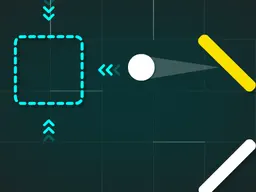
Light On is a free puzzle game you play in your web browser on desktop or mobile where you redirect laser beams using mirrors to illuminate lights on each level. It's a logic-based challenge that starts simple but demands patience and spatial reasoning as you progress through increasingly complex puzzles.
Your First Few Minutes
You begin with a laser source on one side of the screen and a target light somewhere else. Between them sits a grid with mirrors you can rotate or move. The core goal is straightforward: bend the laser beam so it reaches the target and turns the light on. The first handful of levels ease you in with single mirrors and obvious paths. You'll position one mirror, see the beam bounce toward the goal, and complete the level. This immediate feedback loop makes Light On feel accessible at first. But even in these introductory stages, you're learning the angle mechanics that will become crucial later. The game doesn't hand you a solution; it shows you a problem and expects you to find the geometry that works. Most players solve the opening puzzles within minutes, which creates false confidence about what's coming next.
Core Mechanic
The puzzle system revolves around redirecting laser light through a series of mirrors to activate illuminated targets. You interact with mirrors by clicking or tapping them to rotate their angle, changing how the beam bounces. Some levels introduce multiple mirrors, forcing you to think about the chain reaction of angles and reflections. The laser travels in straight lines until it hits a mirror, then bounces at a predictable angle based on the mirror's orientation. Early levels demand only one or two reflections; later stages require five, six, or more bounces to reach the goal, with mirrors positioned across the entire play area. The challenge isn't about speed or reflexes. It's pure puzzle logic: visualizing the path the beam must take and arranging mirrors to make that path real. You have as much time as you need per level, but that freedom becomes a burden when you're stuck on a seemingly impossible configuration. Some levels add complexity by featuring multiple light targets that must all activate from a single laser source, or mirrors that affect the beam in unexpected ways.
Controls
Desktop: Use your mouse to click on mirrors in the play area to rotate them or select them for adjustment. You interact entirely through point-and-click mechanics; there's no keyboard shortcut for core gameplay. Mobile: Tap mirrors with your finger to rotate them in the same way. The touch interface mirrors the mouse control scheme, so the gameplay remains identical across devices. The 1280x720 resolution scales smoothly on phones and tablets, keeping mirrors large enough to tap accurately without frustration. There's no time pressure, so you can take your time positioning each element precisely.
Mistakes Everyone Makes
New players often assume the laser always travels horizontally. It doesn't. The beam path depends entirely on where the source sits and how the mirrors redirect it. Many solve this by trial and error, rotating mirrors randomly until something works. That wastes moves and builds bad habits. A second common trap is forgetting that mirrors have two sides. Rotating a mirror changes the reflection angle by more than you might expect if you're not thinking in three-dimensional geometry. Players also underestimate how far a beam can travel. You might position a mirror thinking the laser will hit it directly, only to realize the beam passes right past it. The play area is larger than most assume in early levels. Finally, people quit levels too fast. Light On demands patience and a willingness to restart your approach. If a configuration isn't working after five attempts, it's almost always because your entire strategy is wrong, not because you're one micro-adjustment away from success. That realization changes how you approach each puzzle.
When the Difficulty Spikes
Around the middle of the game, the puzzles shift from 'find the obvious path' to 'find any path that works.' Levels introduce multiple mirrors spread across the screen, forcing you to plan five or six bounces in advance. Your brain has to hold the entire light path in working memory while considering how rotating one mirror ripples through the entire system. This is when players hit their first major wall. The jump feels unfair at first because the visual feedback doesn't always clarify why a configuration fails. You might have seven mirrors positioned perfectly, but if one is off by a few degrees, the whole sequence breaks. The margin for error shrinks dramatically. Some levels introduce obstacles or barriers that block certain paths, turning the puzzle into a constraint-satisfaction problem rather than pure geometry. Late-game stages combine these elements: multiple mirrors, tight spaces, multiple targets, and limited room to adjust angles. The difficulty isn't arbitrary; it's a careful escalation that assumes you've internalized the fundamentals.
How to Actually Improve
The first step is learning to visualize the beam path without clicking. Before you touch anything, trace where the laser would go if you rotated a mirror a certain way. This mental simulation cuts your trial-and-error time in half. Second, work backward from the target. Instead of asking 'where should I put mirrors,' ask 'what angle does the final mirror need to be to hit this light.' Then work backward from there to the mirror before it. This inverse problem-solving approach feels awkward at first but becomes second nature. Third, accept that some mirrors won't move. Early players try to adjust every mirror on the screen. Usually, three or four mirrors do the real work; the others are red herrings or secondary elements. Spend time identifying which ones actually matter. Fourth, use the grid and background cues. The play area has visual structure; use it to estimate angles. Most puzzles align mirrors with obvious geometric axes, not arbitrary positions. Finally, step away from stuck levels. Light On requires fresh perspective. If you've been staring at a puzzle for ten minutes without progress, your brain has probably locked into a wrong assumption. Walk away, come back later, and the solution often becomes obvious. Patience isn't just a virtue in this game; it's a survival strategy.
What to Expect After an Hour
By the hour mark, you'll have completed somewhere between fifteen and thirty levels, depending on your puzzle-solving speed and willingness to retry. You've likely hit at least two or three puzzles that felt impossible before clicking. The game has taught you that spatial reasoning can be trained and that your first instinct is often wrong. You'll understand mirror angles intuitively and can predict reflections without consciously calculating them. The early levels feel trivial now, but you're entering territory where each new puzzle feels genuinely hard again. You're also discovering your limits. Some players hit a skill ceiling where the next batch of levels demands a type of spatial reasoning they struggle with. Others push through and find the difficulty eventually plateaus. The game's length isn't random; it's designed to test your patience and logical thinking beyond what casual puzzle games usually ask for. If you're still playing after an hour, you're the type of player who doesn't need a story or progression bar to stay engaged. You play because the puzzles themselves are the reward.
Controls
Keyboard and mouse
- Click on mirrors to rotate them and adjust the laser beam direction
- Click and hold, or click multiple times, to rotate a mirror to the desired angle
- Mouse only; no keyboard commands are used for core gameplay
Touch
- Tap mirrors on the screen to rotate them
- Tap and hold to fine-tune mirror angles, or tap multiple times to cycle through positions
- All interactions are touch-based; no keyboard required
FAQ
- Is Light On completely free and do I need to download anything?
- Yes. Light On is free to play directly in your web browser at Atomo Play. There's nothing to download or install. It runs on desktop computers and mobile devices equally well.
- How many levels are in this game?
- The exact number of levels isn't specified by the developer, but Light On is built as a full puzzle game with many stages that escalate in difficulty. There's enough content to keep you occupied for several hours if you solve them all.
- Can I play Light On on my phone or tablet?
- Yes. The game runs in any web browser on mobile devices with its 1280x720 display scaling to fit your screen. Tap mirrors the same way you click them on desktop. Touch controls work identically to mouse controls.
- What happens if I can't solve a puzzle?
- Light On doesn't have a skip button or hint system built in. If you're stuck, you need to keep analyzing the puzzle or step away and return later with fresh eyes. The game expects you to find the solution through logic and spatial reasoning, not by bypassing the challenge.
- Do I need a mouse or keyboard, or does the game work with just touch?
- Touch alone is enough. On mobile, tapping mirrors works perfectly. On desktop, a mouse is the simplest way to interact, but the game is designed around single-click mechanics, so any pointing device functions.
- Is this game similar to other laser puzzle games?
- Light On focuses specifically on mirror reflection and beam redirection. It's a logic puzzle at its core, not a reaction-time game. If you've played other beam-bending or laser-reflection puzzles, you'll recognize the concept, though the specific level design and difficulty curve are unique to Light On.
- Does the game have different difficulty modes?
- The game progresses through a single campaign with levels that gradually increase in complexity. There's no separate easy or hard mode. The difficulty curve is built into the level sequence itself.
Similar games
More Puzzle Games games →