Dungeon Box
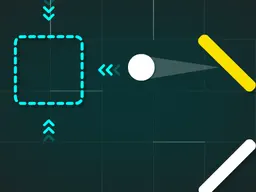
Dungeon Box is a free puzzle game that runs in your browser on desktop and mobile where you control when a wall appears at the bottom of a dungeon to keep a bouncing ball trapped inside. The ball moves constantly around a three-walled chamber, and you have to click or tap at exactly the right moment to summon a temporary barrier at the open bottom—timing is everything, and one mistake sends the ba
The First Minutes
When you start Dungeon Box, you see a simple arena: three solid walls forming a U-shape, and one open side at the bottom. A ball bounces or rolls around inside, moving constantly. There's no intro, no menu—just the ball and the space. You'll quickly understand that your job is to prevent it from falling out the bottom. The first few attempts, you're just getting a feel for how fast the ball moves and how long it takes your brain to react. Most new players tap too early or too late on their first try, watch the ball escape, and immediately restart. That's the whole game: one simple rule, infinite attempts, instant feedback. By minute three, you'll have landed your first successful block, and the core tension of the game becomes clear—it's not about complex strategy, it's about rhythm and precision.
Main Mechanic
The entire game revolves around one action: summoning a wall at the bottom of the dungeon. The ball is already in motion before you begin, bouncing or rolling against the three permanent walls. When it comes toward the bottom opening, you have to activate the barrier by clicking or touching. The wall doesn't stay there forever—it's temporary—so your timing has to be tight. If you summon it when the ball is nowhere near the bottom, you've wasted the barrier and the ball will eventually reach the opening while you're waiting for the next opportunity. If you're too slow, the ball escapes and you lose. The challenge is that the ball's speed and trajectory are fixed, so every run follows a predictable path once you learn it. This means Dungeon Box isn't about reacting to randomness—it's about learning the exact moment to press, then executing that moment consistently. Each successful block keeps you alive for another cycle.
Controls
On desktop, you use your mouse to click anywhere on the game window to summon the wall. On mobile devices, you tap the screen anywhere to activate the barrier. There are no other inputs—no menu navigation, no upgrades to scroll through, no pause button. It's stripped down to the absolute minimum: one action, one goal. The simplicity means there's no learning curve for the controls themselves. Everyone understands how to click or tap. What you're actually learning is timing, not the input method.
Mistakes Everyone Makes
The biggest beginner error is panic clicking. When you see the ball approaching the bottom, instinct tells you to mash the button or tap repeatedly. This doesn't work because the wall is temporary—extra clicks don't help, and you can confuse your own timing. New players also underestimate how precise you need to be. You can't summon the wall when the ball is three inches away and expect to catch it safely; you need to activate it when the ball is almost at the edge. Another common trap is overthinking. Some players watch a few attempts and try to predict the ball's exact position, then hesitate at the crucial moment because they're second-guessing themselves. The game punishes hesitation harder than it punishes a slightly mistimed tap. Finally, many people give up after five or ten failures, thinking the game is unfair or broken. The reality is that Dungeon Box has a strict mechanical window, and you just haven't found your rhythm yet.
When It Gets Hard
After your first few successful blocks, the game doesn't change its rules—but it does start to feel harder because you're aware you can do it, and missing feels worse. The ball's behavior doesn't become random or faster; the difficulty is psychological. You're chasing consistency. One successful run might be followed by three failures because you're thinking too much or your hand is tense. Around attempt twenty or thirty, you might hit a streak of four or five successful blocks in a row, and that's when you know you're close to truly understanding the timing. But then a tiny delay in your reaction, or a finger touch that didn't register properly on mobile, and the streak breaks. The game's real difficulty spike isn't a change in mechanics—it's the frustration of knowing exactly what you need to do and failing to execute it repeatedly.
How to Actually Improve
Stop trying to predict the ball. Instead, watch it move through several complete cycles without clicking at all. Learn what the motion looks like. Once you've seen it five or six times, your brain will start anticipating the approach automatically. Then try summoning the wall—not at the bottom, but slightly before, so you're comfortable with your reaction speed. As you get comfortable, gradually adjust your timing to activate it later and later until you're hitting the ball at the last possible moment. On mobile, keep your finger loose and ready, don't grip the device tight. Tension kills timing. On desktop, keep your mouse hand relaxed and close to the screen, not hovering high above. Most importantly, play in short sessions. Your best attempts usually come in the first minute or two, before fatigue sets in. If you've been trying for three minutes without success, take a break. Your next session will feel easier, and you'll often succeed immediately because your body has had time to internalize the timing unconsciously.
What to Expect After an Hour
If you've played for a solid hour, you'll likely have experienced multiple successful blocks in a row and understand the exact moment you need to tap or click. The game will start feeling less random and more like a skill you're building. You might hit a personal record of five, six, or more consecutive saves before the ball finally escapes. The gameplay loop—fail, restart, try again—becomes almost meditative. Some players find they hit a plateau around the one-hour mark where they can succeed maybe sixty percent of the time, and further improvement requires both more practice and accepting that perfect consistency is the goal, not a realistic everyday outcome. Dungeon Box doesn't offer new levels, new mechanics, or unlockables to chase. What you're doing at one hour is exactly what you'll be doing at ten hours. That's either a feature or a limitation depending on what you want from a game. If you're here for pure skill refinement and the satisfaction of improving at a single, simple task, Dungeon Box delivers exactly that. If you need progression and variety, this game won't hold your attention much longer.
Controls
Keyboard and mouse
- Click anywhere on the screen to summon the wall at the bottom of the dungeon
Touch
- Tap anywhere on the screen to summon the wall at the bottom of the dungeon
FAQ
- Is Dungeon Box free and do I need to download it?
- Yes, it's completely free and runs directly in your web browser. There's nothing to download or install. Just click play and start immediately.
- Can I play this on my phone?
- Yes. Dungeon Box works on any mobile device with a browser. The game is designed for touch screens and adapts to mobile screen sizes automatically.
- What happens when I mess up and the ball escapes?
- You lose and the game restarts instantly. There's no penalty beyond having to try again. You can keep attempting as many times as you want with no limit.
- Does the ball's speed or direction ever change?
- No. The ball follows the same path and moves at the same speed every run. The challenge is purely about learning and executing the exact timing to block it.
- Is there a scoring system or way to track my best performance?
- The game measures success in consecutive successful blocks before the ball escapes. Each run you survive adds to your current streak. The game tracks whether you can chain multiple saves together.
- Are there different difficulty levels or game modes?
- No. Dungeon Box is a single-mode game. There's one arena, one ball, and one mechanic. All players experience the same challenge.
- How long does a typical play session last?
- That depends on your skill. A single attempt might last five to thirty seconds depending on when the ball escapes. Most players find short sessions of five to fifteen minutes feel natural before needing a break.
- What's the point if there's no end goal or final level?
- Dungeon Box is about personal improvement and skill mastery. The goal is to see how many times you can successfully block the ball in a row, beat your own records, and refine your timing to near-perfect consistency.
Similar games
More Puzzle Games games →