Game Dino Run - Free Running Game in Your Browser
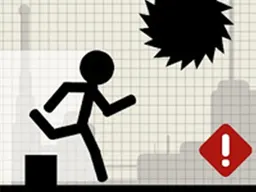
Game Dino Run is a free running game you can play instantly in your browser on desktop or mobile, where you control a dinosaur sprinting for survival. Jump over cacti, slide under obstacles, and rack up the highest score while dodging birds and staying out of pit traps. Simple controls and fast-paced action make it perfect for quick gaming sessions.
Your First Minutes
You start running immediately. There's no setup, no tutorial screen—just a dinosaur moving forward automatically across a desert landscape filled with hazards. The first obstacle appears within seconds: a cactus. You'll need to jump over it. The screen scrolls right to left, similar to the style of classic endless runners, and your job is simple but demanding: stay alive as long as possible. The longer you run without crashing, the higher your score climbs. You'll notice birds diving from above and the ground itself breaks apart into gaps. Your instinct will be to jump constantly, but the game teaches you quickly that timing matters. Press jump too early and you'll fall short. Press it too late and you're stuck. By your third attempt, you'll start feeling the rhythm of the obstacles.
Main Mechanic
The core loop is survival through obstacle avoidance. Your dinosaur runs forward automatically—you have no control over speed or direction. Instead, you manage two actions: jumping and sliding. Jumping clears obstacles above the ground like cacti and flying birds. Sliding ducks under low-hanging threats and helps you fit through tight gaps. The obstacles come faster as you progress, and your score increases with every second you survive. There's no power-up system or weapon mechanic. You won't collect items or unlock abilities mid-run. The game stays pure: just you, your reflexes, and an endless stream of threats. The difficulty curve is smooth but relentless. In your first minute, obstacles appear with breathing room. By minute three, they come in rapid combinations, forcing split-second decisions between jumping and sliding. A pit trap can swallow you if you misjudge where the ground ends. The birds require timing to dodge, and cacti demand precise jump height. Unlike some running games, there's no randomness in the obstacle placement—each run follows the same sequence, which means repeated attempts help you memorize and improve.
Controls
On desktop, use the up arrow key to jump and the down arrow key to slide. On mobile or tablet, tap the on-screen buttons that appear at the bottom—one for jump, one for slide. The controls are responsive and designed for quick reactions. Jumping needs to be timed: too short and you clip the obstacle, too long and you waste airtime. Sliding works instantly when needed, dropping your dino low to slip under threats. The game expects you to alternate between both actions fluidly. Many players new to the game rely too much on jumping and ignore the slide button, which limits how you can handle certain obstacle patterns later.
Mistakes Everyone Makes
The biggest trap is panic jumping. New players mash the jump button repeatedly when they see obstacles approaching, which kills them faster. You jump too high, land at the wrong moment, and crash into the next hazard. Instead, learn to wait a half-second, judge the gap, and execute one clean jump. Second mistake: forgetting the slide exists. Sliding isn't optional flavor—it's essential. Some obstacles are built to require sliding, and you can't jump over them. Players who never use the slide button hit a wall around the two-minute mark when the game demands it. Third mistake: playing while distracted. This game punishes inattention immediately. Unlike puzzle games where you can pause and think, the obstacles keep coming. One second of looking away costs you the run. Players often restart before even trying because they assumed they weren't good enough, when they just weren't focused. Fourth mistake: expecting to survive the same way every time. The game follows a set pattern, but if you try the exact same jump timing on every run, you'll fail differently each time because your timing drifts slightly. You need to stay alert and adjust, not robotically repeat motions.
When It Gets Hard
Around the three-minute mark, the game transforms. Obstacles stop appearing one at a time and start arriving in clusters. You'll face a cactus immediately followed by a low-flying bird, then a slide-required gap, then another cactus. The rhythm breaks. Your brain can't plan ahead because the next threat is already visible. This is where most players' runs end. The feeling is overwhelming at first, but it's actually the game revealing its real challenge. At this stage, you're no longer thinking about each obstacle individually—you're reading the pattern. Your hands move almost automatically, responding to shapes and spacing rather than conscious decisions. Some players quit here, convinced they've hit the skill ceiling. They haven't. They've just reached the point where the game stops being forgiving. Five to seven minutes in, if you've survived this long, you've learned to read ahead and predict. Pits become easier to spot. Bird patterns become familiar. Cactus clusters feel less random. But the frequency keeps climbing, and the margins for error shrink to milliseconds. The game never gives you a break—there's no safe zone, no slow section to recover. This is the intended design: it's an endless runner that never stops accelerating until you fail.
How to Really Improve
Practice one obstacle type at a time mentally. Your first five runs, focus only on learning when to jump and when to slide, ignoring your score. Runs six through ten, focus on consistency—try to beat your previous best time. By run fifteen, your muscle memory improves enough that you stop thinking consciously about button timing. Watch where pit traps appear and memorize their locations. Since the sequence repeats, patterns will emerge. Note which bird timings require early jumps and which need late ones. The biggest improvement comes from accepting that you'll fail many times before progress shows. Players who survive five minutes today might survive two minutes tomorrow if they're tired or distracted—that's normal variance. What matters is the longest run. If your best is four minutes, the next target is five. Each minute represents mastering a new obstacle arrangement, not just reaction time improvement. Play in short bursts. Three runs feels better than fifteen in a row because fatigue kills accuracy faster than anything else. Your first run of a session is usually your worst. Runs two and three are peak focus. By run five, you're tired and mistakes climb. Take a break, come back later. Many casual players don't realize their skill plateaus not because they've maxed out, but because they're playing while fatigued or bored.
What to Expect After One Hour
After an hour of total playtime spread across several sessions, you'll have a personal best—most likely in the range of two to five minutes depending on your baseline reaction speed. You'll recognize every obstacle type, know where most pit traps hide, and understand the rhythm of the game's acceleration. The difficulty will still feel high, but it won't feel impossible or random anymore. You'll understand exactly which mistakes caused each death and how to avoid them next time. The frustration of early attempts—dying to the same obstacle three times in a row—transforms into the satisfaction of executing a perfect skip over a clustered threat. At this point, the game becomes less about learning and more about execution. Your scores will improve slower now, grinding up to that next milestone. Some players stop here, satisfied they've beaten the early curve. Others become obsessed with chasing their personal record, running another fifty times trying to break six minutes or survive long enough to reach a new score tier. The game has no ending, no final boss, no victory condition—just the endless pursuit of that next personal best. After an hour, you'll know exactly whether you enjoy that kind of gaming loop or if you prefer games with more defined goals and conclusions.
Controls
Keyboard and mouse
- Up arrow key: Jump
- Down arrow key: Slide
- Press and release quickly for precision timing
Touch
- Tap the jump button on the right side of the screen
- Tap the slide button on the left side of the screen
- One-tap actions respond immediately without holding
FAQ
- Do I need to download anything to play?
- No. Game Dino Run runs entirely in your web browser. Just open the game page and start playing immediately. It works on desktop, tablet, and mobile phones without installation.
- Is this game free?
- Yes, completely free. No payment required, no premium content locked behind paywalls. Play as much as you want.
- What's the difference between jumping and sliding?
- Jumping clears obstacles above ground level, like cacti and birds. Sliding crouches your dinosaur low to fit under gaps and avoid certain threats that require ducking. Both actions are essential—you can't beat the game using only jumps.
- Does the game get easier or harder over time?
- It gets harder. Obstacles appear more frequently and in tighter combinations as you survive longer. The game never slows down or gives you a rest period. Each run ends when you crash, then you start fresh from the beginning.
- Is there a way to pause or save progress between runs?
- No pausing mid-run, but your highest score is tracked. Each time you play, you're chasing your personal best. When you crash, the run ends and you restart from the start of the level.
- Can I play on my phone?
- Yes. The game works on mobile and tablet browsers. Tap the on-screen buttons to jump and slide instead of using keyboard keys. The gameplay adapts to any screen size.
- What happens if I fall into a pit?
- Falling into a pit ends your run immediately—instant game over. Pits appear as gaps in the ground ahead. You need to jump over them before you reach the edge.
- Why do I keep dying to the same obstacle?
- Timing matters more than you might think. Your jump needs to clear the obstacle with room to spare. Practice that specific section until the timing feels natural. Remember you can also slide to get under certain threats instead of always jumping over them.
Similar games
More Puzzle Games games →