Block Blast Unblocked - Free Puzzle Game Online
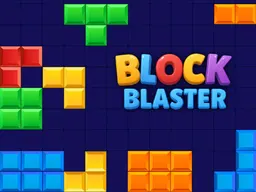
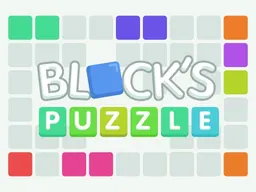
Block Blast Unblocked is a free puzzle game you play directly in your browser on desktop or mobile, where you drag different shaped blocks onto a grid to fill empty tiles and complete 50 challenging levels using strategy and spatial reasoning.
About the Game
Block Blast is a puzzle game where your goal is straightforward: fill a grid with blocks of different shapes and sizes. You're given a set of pieces to work with, and you need to place them strategically onto the board to complete rows, columns, or the entire grid before moving to the next level. The game starts simple enough, but as you progress through the 50 levels, the spatial challenges become trickier. The board layouts change, blocks come in varied configurations, and you'll need to think several moves ahead to avoid painting yourself into a corner. There's no timer pressure—this is pure puzzle solving at your own pace. The mechanics are straightforward to learn in the first minute, but mastering the strategic placement of blocks takes practice. You'll find yourself in situations where one wrong piece placement blocks an entire solution path, forcing you to restart and think differently. It's exactly the kind of puzzle experience that keeps players coming back: easy to pick up, genuinely challenging to master.
How to Play
When you start a level, you'll see an empty or partially filled grid and a selection of blocks waiting below or to the side. Your job is to place these blocks onto the grid until you've filled the required spaces or completed the objective for that level. Each block has a fixed shape—some are simple squares, others are longer bars or L-shaped pieces, and some are more irregular. You can't rotate blocks or flip them; they fit only one way. The trick is finding the right position and order. Start by looking at the grid and identifying the empty spaces, then figure out which blocks from your available set can fill them efficiently. As you progress, you'll encounter grids with obstacles or specific patterns you need to complete. Some levels require you to fill the entire board, while others ask you to clear specific rows or sections. Think about how each block placement affects the remaining space and which blocks you have left. Early levels are forgiving, but level 10 and beyond demand real planning. You'll need to consider not just one move, but how your current placement affects where you can put future blocks.
Controls
The game uses simple mouse or touch controls that work equally well on desktop and mobile devices. On desktop, use your mouse to click and drag a block from the available selection onto the grid. Click on the block you want, hold down the mouse button, drag it to your target position on the grid, and release to place it. If you want to undo or change your mind, most puzzle games like this let you pick the block back up before confirming. On mobile and tablets, the touchscreen works the same way: tap and hold on a block, drag your finger to where you want to place it on the grid, and lift your finger to drop it. The responsive design adapts to the 405x720 screen format, so whether you're playing on a phone or tablet, the grid and blocks scale appropriately. The interface is minimal and gets out of your way—no complex menus or hidden buttons. All the action happens on the board itself.
Tips for Scoring Higher
While Block Blast focuses on completion rather than points, getting better at each level means playing smarter. First, scan the entire grid before placing any block. Understand the layout and see which pieces fit where before committing. Second, avoid trapping yourself. Place blocks in a way that leaves room for the remaining pieces you have. This is the most common mistake: a piece fits perfectly in one spot, but it blocks the only place where another essential block can go. Third, work from the edges inward when possible. This tends to leave more flexible space in the middle for trickier pieces. Fourth, identify constraint points—spaces that only one or two blocks can fill—and plan around them. If a narrow slot can only fit one specific piece, don't waste that piece somewhere else. Finally, when you're stuck, step back and restart. Sometimes a different ordering of the same pieces solves what seemed impossible. The puzzle is always solvable; you just need to find the right sequence.
Advanced Techniques
Once you've cleared the early levels, the game introduces complexity that rewards planning and pattern recognition. One technique is reverse engineering: look at what needs to be filled and work backward to figure out which blocks must go where. Another is identifying keystone pieces—blocks that, due to their shape, fit only in a few specific locations. Prioritize placement of these pieces first, then fill around them with the more flexible blocks. Some players find it helpful to group similar block shapes mentally: all the straight bars, all the L-shapes, all the squares. This helps you quickly scan which pieces can address which grid sections. Pay attention to how the game advances between level tiers. Around levels 15-20, the difficulty spike often introduces grids with more complex shapes or asymmetrical layouts. Expect that the strategy that worked for the first 10 levels needs adjustment. Learning to spot these transitions and adapt your approach faster is what separates casual players from those who breeze through. When a level feels impossible after several attempts, the solution usually involves one move you haven't considered yet. Sometimes it's placing a block in a position that seems wasteful or counterintuitive. Keep that in mind and experiment with unconventional placements.
Levels and Progression
Block Blast contains 50 levels of increasing difficulty. The early levels serve as a tutorial by example, introducing block shapes and basic grid layouts. Levels 1-5 are designed to teach you the controls and the concept of piece placement. By level 10, the game expects you to think one or two moves ahead. Levels 15-20 introduce grids with more complex spatial demands or larger boards. The mid-section, around levels 25-35, is where many casual players hit a wall and either adapt their strategy or take a break. The final levels, 40-50, assume you're comfortable with the game's core mechanic and test your puzzle-solving endurance and pattern recognition. Each level presents a fresh grid configuration, so there's no two levels that play exactly the same. Completion of all 50 levels is the main progression goal, and there's a clear sense of achievement in finishing the full campaign. The game doesn't cycle through levels again after completion; it's a linear progression from start to finish.
Who This Game Is For
Block Blast suits anyone who enjoys puzzle games that rely on logic and spatial reasoning rather than reflexes or time pressure. If you liked games with similar grid-based block-placement mechanics but prefer something more relaxed, this game delivers. It's perfect for players looking to kill time on a browser without installing anything—just click and play. The game works on mobile, so it's also great for commutes or downtime. It appeals to strategy-minded players who enjoy thinking through problems, not action-game fans. Younger players and teenagers appreciate the straightforward rules and progressive difficulty. Casual gamers who want something more engaging than a simple match-three game but less intense than a roguelike will find the right balance here. Because there's no time limit, it's accessible to players who need to think things through carefully. If you're the type who enjoys untangling a physical puzzle or solving a Rubik's cube, you'll gravitate toward games in this style. This is not for players seeking competitive multiplayer, fast-paced action, or narrative-driven experiences. It's pure puzzle mechanics in a free, browser-based package.
Controls
Keyboard and mouse
- Click on a block in the selection area to select it
- Drag the selected block onto the grid to position it
- Release the mouse button to place the block
- Click and drag again to move a different block or restart your attempt
Touch
- Tap and hold on a block in the selection area
- Drag your finger to the position on the grid where you want to place it
- Lift your finger to drop the block into place
- Repeat with other blocks until the level is complete
FAQ
- Is Block Blast completely free?
- Yes, Block Blast is a free puzzle game you can play directly in your browser without paying or downloading anything. You can start and complete all 50 levels at no cost.
- Can I play Block Blast on my phone?
- Yes. The game works on any device with a modern web browser, including phones and tablets. The interface is designed for touchscreen, and it plays smoothly on mobile without requiring an app download.
- Can I rotate or flip the blocks?
- No. Each block has a fixed shape and orientation. You cannot rotate or flip pieces; they fit only one way onto the grid. This is part of what makes the spatial puzzle challenging.
- What happens if I get stuck on a level?
- If you're stuck, you can restart the level and try a different approach. There's no penalty for restarting. Every level is solvable with the pieces provided; the solution just requires finding the right placement sequence. Take a break and come back with fresh eyes if you're frustrated.
- How many levels are in the game?
- Block Blast has 50 levels total. They progress in difficulty from beginner-friendly layouts in the early levels to more complex spatial challenges as you advance. Completing all 50 is the main goal.
- Is there a time limit for each level?
- No. There's no timer or time pressure in Block Blast. You can take as long as you need to figure out each puzzle. This makes it a relaxing, strategy-focused experience rather than a fast-paced one.
- What's the difference between Block Blast and other block puzzle games?
- Block Blast focuses on filling grids with blocks of different shapes where blocks cannot be rotated. The mechanic is simpler than some block puzzle variants but demands real strategic thinking. It's designed for pacing and problem-solving rather than quick reactions or time-based scoring.
Similar games
More Puzzle Games games →